How Many People Does a Picnic Basket Really Serve? A Sizing Guide
A basket advertised for four people arrives, you open the lid, and there is room for two plates, four glasses and nothing else. Or the opposite: a two-person hamper turns up big enough for a family and looks clumsy on a gift shelf.
Both happen because the number in the title is a convention, not a measurement. It describes how many place settings the factory had in mind, not how much food you can carry.
This guide breaks the number down into the four dimensions that actually decide capacity, then shows how to check a basket on paper before you order a container of them.
The number in the listing is a convention
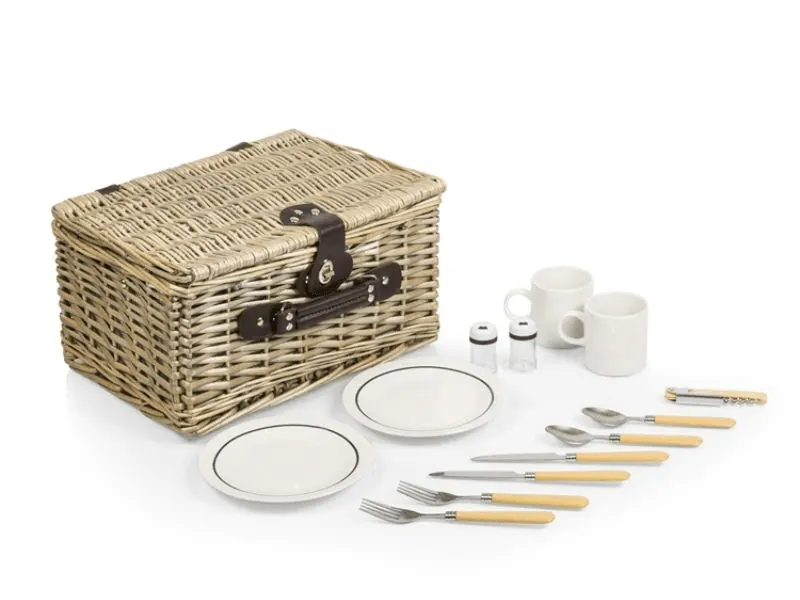
In the trade, a two-person basket means two plates, two glasses, two napkins and cutlery for two. A four-person basket means four of each.
Notice what is not in that list. Food, a bottle, a folded blanket, a cutting board, a flask. Those all compete for the same space, and they are the reason buyers get surprised.
So the first useful question is not how many people, it is how many place settings plus how much cargo. Once you separate those two, sizing stops being guesswork.
What the outside measurement tells you, and what it hides
Listings almost always quote the outside length. That number includes the wall, the rim binding and, on an oval basket, the curve at each end that nothing useful fits into.
Take the outside length, subtract the wall twice, and subtract the rim overhang. What is left is the flat floor you can actually use. On a heavily bound rim the difference is more than an inch at each end.
Then check the depth. A shallow bread tray and a deep hamper can share a length and hold completely different things, because one lets a bottle stand up and the other does not.
The four numbers that decide capacity
Internal length, internal width, internal depth, and the internal height above the load line once the lid closes.
The fourth one is the one people forget. A domed lid gives back some height in the middle. A flat lid with a fabric panel and cutlery straps takes height away, and it takes it exactly where the plates want to sit.
Ask for those four numbers in writing, on the actual basket, not on the category page. If a supplier cannot give them, they have not measured the basket.
Round, oval, rectangle and barrel hold different amounts
The shape changes capacity more than the length does, and buyers rarely account for it.
A rectangle gives you the full footprint. An oval gives you the middle and loses both ends, which is fine if the ends hold a bottle and annoying if they are supposed to hold plates.
A round basket loses all four corners, so a fourteen inch round holds less than a fourteen inch rectangle by a wide margin.
A barrel is the odd one out. It is narrow at the base and wide at the rim, so the usable floor is smaller than the opening suggests and everything sits in a smaller circle than the lid suggests.
If a buyer is comparing two baskets at the same price, ask which shape before comparing anything else. Two baskets with identical lengths and different shapes are not the same product.
A rule of thumb you can run on paper
For each place setting, budget a square of flat floor equal to the plate diameter. A ten inch plate needs a ten inch by ten inch patch, because nothing stacks anything on top of a plate in a basket that has a lid.
Round and oval baskets lose the corners, so treat them as an inscribed square. A fourteen inch round basket gives you roughly ten inches of usable straight edge across the middle, not fourteen.
Cutlery goes in bundles, not individually. One bundle per setting, plus one spare, is the usual allowance, and it can live in the lid straps if the lid has them.
Glasses need standing height, roughly seven to nine inches depending on the shape. A basket with six inches of internal depth will not stand a wine glass up, which is why so many of them travel lying down in the lid instead.
Where the plates and glasses actually go
Most four-person hampers put the plates flat on the floor of the basket and strap the glasses into the lid. That works, but only if the lid is deep enough and the straps are long enough for the glass you intend to ship.
If the glasses stand up inside the body, they eat floor area and they touch the lid, which is where breakage comes from in transit. If they hang in the lid, the lid has to be reinforced, because a hanging glass is a lever acting on the hinge.
This is a design decision you can specify. It is not something to discover at the sample stage.
Food is the part nobody budgets for
Place settings are fixed. Food is not. A cheese and charcuterie lunch takes a fraction of the room that a hot lunch in sealed containers takes, and the basket that looked generous for four people suddenly holds two.
The pattern we see in orders is that buyers count plates and forget the containers. A four-person basket with four plates, a cool bag and a bottle has almost no floor left for food, because the accessories have already taken it.
So the fifth number in any sizing conversation should be the food. Is it sandwiches wrapped in paper, or three sealed containers, or a cheese board? Each answer moves the size by an inch or more.
Two-person hampers are the tightest brief
Small baskets carry a fixed overhead. A cool bag, a bottle sleeve, a cheese board and a napkin roll take a similar amount of room whether the basket serves two people or six.
On a six-person basket that overhead is a small share of the volume. On a two-person basket it is most of it, and the two place settings get squeezed into whatever is left.
That is why two-person baskets are where customers complain that the plates do not fit, or that the lid will not close once a bottle goes in. When you brief a two-person hamper, decide first what the fixed overhead is, then size the basket around it.
The bottle is usually the decision that makes or breaks the design. Lying flat it needs length, standing up it needs height, and in a sleeve on the outside it needs neither but it changes how the basket carries.
Four-person is where most orders land
Four settings is the volume seller for a reason. It is small enough to carry with one hand and big enough to hold a real meal, and the fixed overhead stops dominating.
The trade off appears in the fittings. A four-person basket usually has one cool compartment, one bottle sleeve and four sets of cutlery, and at that point the straps and hinges are doing real work. This is the size where cheap hardware shows up first.
If you are building one range, build it here, then scale the design up and down rather than starting from a two-person basket.
Six and eight person: when a basket stops being the answer
Past four settings, a basket gets heavy before it gets roomy. Six plates plus six glasses plus cutlery is a load that wants two hands and a wide grip, and the weave has to be thicker to carry it without sagging.
That is why the large sizes tend to change shape rather than just grow. They get wheels, a backpack harness, or a lid that folds out into a table, because the carrying problem has overtaken the storage problem.
If a buyer asks for an eight-person basket, the honest answer is usually a cooler bag with a frame, or a basket on wheels. Saying so early saves a sample round.
The word large is doing a lot of work
Large, extra large and XXL are marketing words with no definition. Two baskets both called large can differ by four inches in length.
When a quote comes back, ignore the adjective and ask for the internal dimensions again. If the difference between two quotes is in the fittings rather than the size, the sizes will match and the prices will not, which tells you something useful.
Mini and single-person baskets are not small versions
A mini basket is a gift object. It holds a jar, a napkin and a small bunch of flowers, and it is sold for favors, hampers and table settings, not for eating out of.
A single-person basket sits between the two. It is a lunch basket with a plate, a cup and a compartment, and it sells to people who eat outside alone rather than to families.
Sizing either one by scaling down a four-person basket produces a basket that looks wrong, because the fixed overhead does not scale. Design them from the intended contents instead.
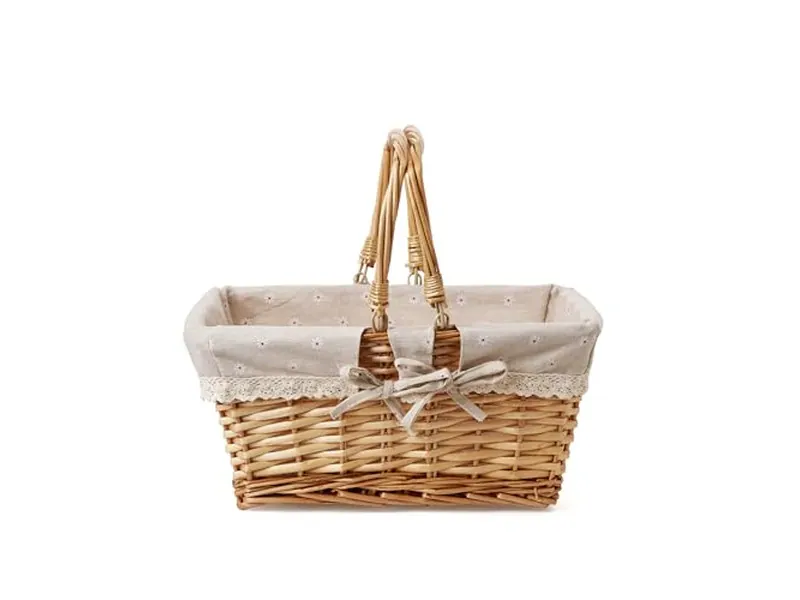
Children's baskets are sized by age, not by headcount
A toy basket for a three year old and a real basket for a ten year old are different products that happen to share a name.
The toy version is a prop. It has to be light enough to carry, smooth enough not to splinter, and shallow enough that a child can reach the bottom. Capacity is irrelevant.
The real version has to survive a child actually using it. That means a smaller plate count, a lid that will not slam on fingers, and a handle sized for a smaller hand.
Handle height matters more here than on any adult basket. A child drags rather than lifts, and a handle that is too tall puts the basket on the floor within a week.
Wine and cheese sets need vertical room, not floor area
A wine and cheese basket is mostly a geometry problem. The bottle wants either length or height, the cheese board wants a flat rigid surface, and the glasses want either standing room or a secure pocket.
Boards built into the lid are a neat answer, because the board doubles as the lid panel and adds stiffness. The cost is weight, and the board has to be thick enough not to bow when someone cuts on it.
If the board is thin enough to flex, the basket will not close cleanly after a few uses. That is worth checking on the sample with a real knife.
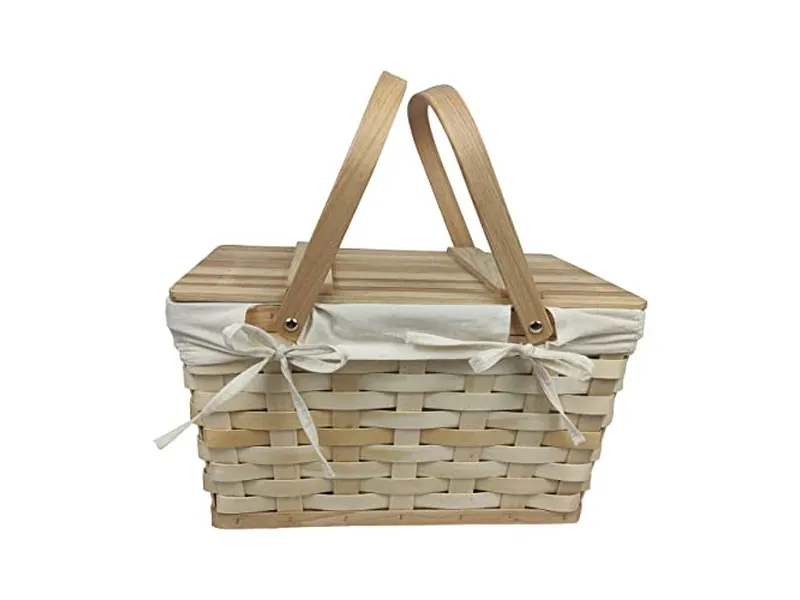
Insulated liners and cool bags take volume from everywhere
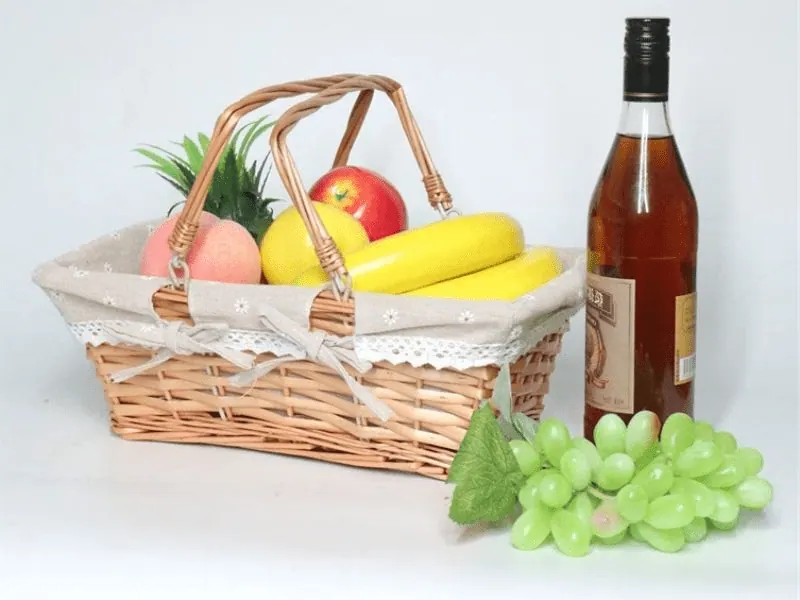
An insulated liner is not free space. Foil and foam take a finger's width on every side, and a zip top takes more.
On a two-person basket that can be a third of the usable floor. On a six-person basket it is noise. When a buyer asks for insulation, tell them what it costs in capacity, because they will notice on the first order either way.
A lining changes the depth you can use
A fabric lining is drawn tight across the base, which lifts the effective floor slightly, and it is gathered at the rim, which narrows the opening.
That narrowing is usually fine for plates and annoying for anything rectangular. If the basket has to take a rectangular container, check the opening rather than the body.
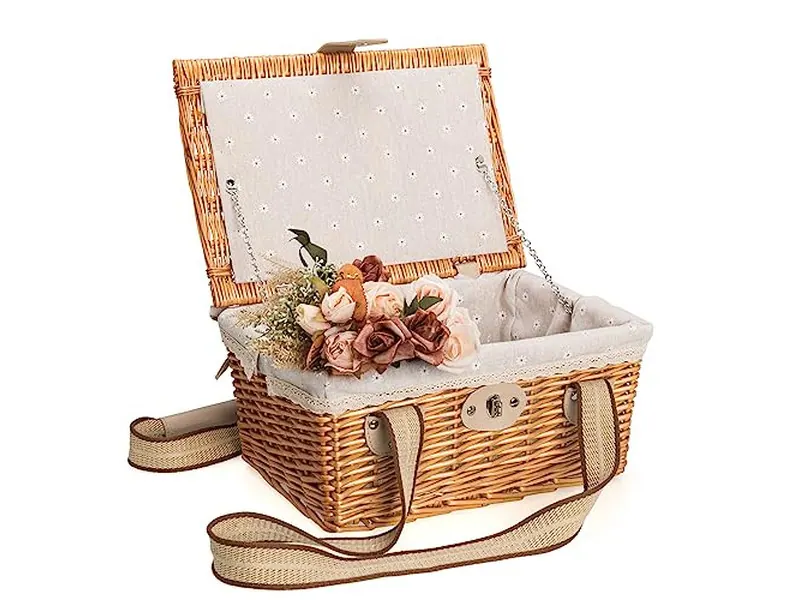
How to brief a supplier in five numbers
Give them internal length, internal width, internal depth, the tallest item that has to stand up, and the weight the basket will carry when full.
Those five numbers remove almost all of the ambiguity in a sizing conversation, and they make two quotes genuinely comparable. Outside dimensions and a headcount will not.
Add the fitting list as a sixth line: how many plates, how many glasses, whether cutlery hangs in the lid, whether there is a cool compartment, whether a blanket rolls on the outside. Each item removes floor area, and the effect is not linear.
One more line worth writing down is the tolerance. A hand woven basket is measured after weaving, and the same pattern comes out a little different from batch to batch. Set an allowance on paper so nobody rejects a container over a quarter inch.
Checking the sample when it lands
Put a real plate in the basket. Close the lid. Lift it by the handle and walk across the room.
Then do it with the basket full, or as close to full as you can get. Almost every sizing problem shows up in that walk, either as a lid that will not latch or a handle that digs in.
Finally, check the opening against the widest item, not the body. A basket that measures right and opens too narrow is the most common surprise in this category.
Where to go next
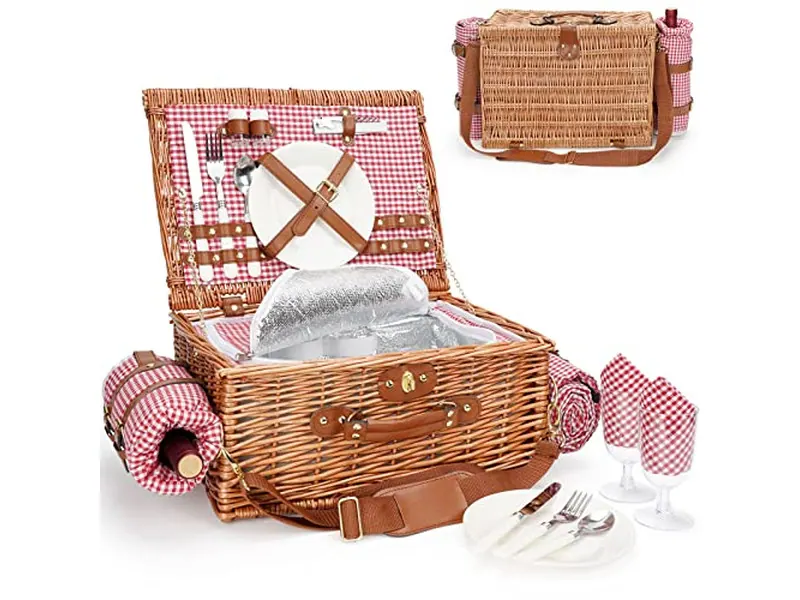
You can see how these sizes look in finished baskets on our products page. That includes a four person hamper with plates fixed in the lid and a six person lined hamper with a shoulder strap.
There is also a wide flat basket with a wooden board in the lid, which is the shape that works best for wine and cheese sets.
If you already know the plates and the bottle you need to carry, send us those numbers and we will tell you which size to build. Get in touch with the internal dimensions you need and we will come back with options.